
October 1 marked a defining moment for global markets. Volatility surged as a confluence of economic headwinds struck simultaneously. Gold prices shattered historical records. Meanwhile, the looming threat of a U.S. government shutdown rattled investor confidence. In London, the FTSE 100 index reacted with a characteristic, yet complex, “mixed” performance.
The UK’s blue-chip index found itself caught in a tug-of-war. On one side, safe-haven demand lifted specific stocks. On the other, risk-off sentiment hammered growth-sensitive sectors.
This divergence highlights the current fragility of the global economic landscape. Investors are fleeing to safety while simultaneously dumping assets tied to economic expansion.
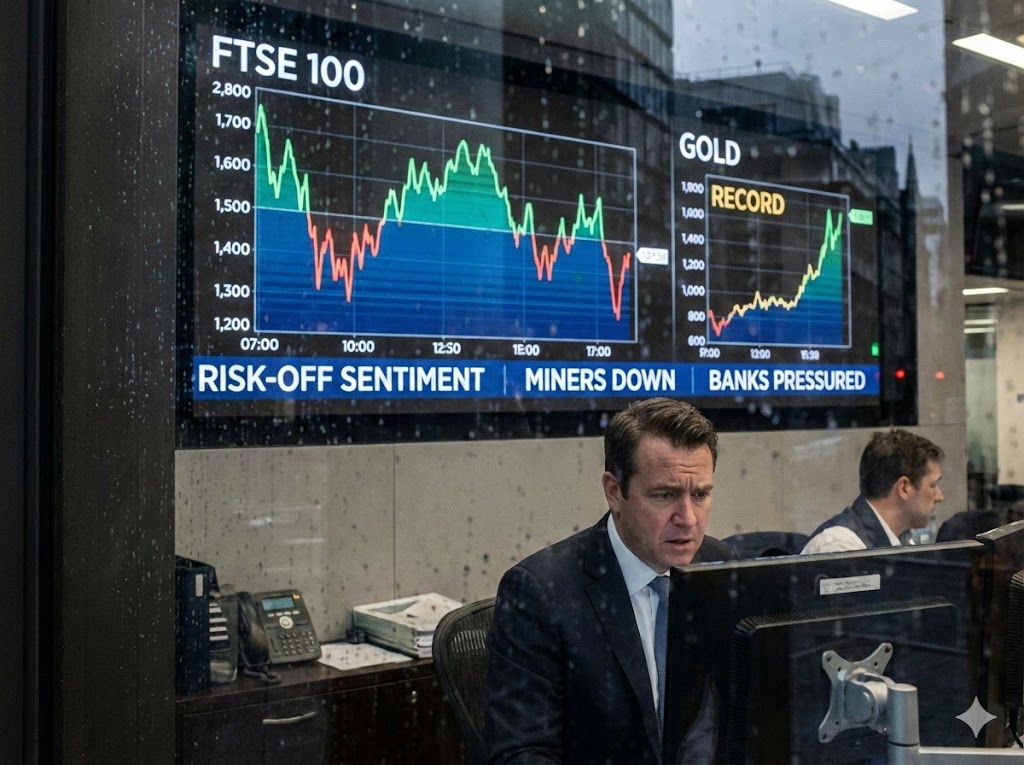
The Gold Rush: A Record-Breaking Rally
The headline grabber for the day was undoubtedly gold. The precious metal soared to unprecedented heights. Spot prices breached psychological barriers, driven by a “perfect storm” of catalysts.
Investors flocked to bullion as a hedge against uncertainty. The primary driver was the fear of a U.S. federal government shutdown. Such an event threatens to delay critical economic data. It also casts doubt on the stability of U.S. fiscal policy. Consequently, the U.S. dollar weakened significantly against major peers.
A weaker dollar typically boosts gold prices. Since gold is priced in dollars, it becomes cheaper for foreign buyers. This inverse relationship was in full effect on October 1.
Furthermore, persistent central bank buying has underpinned this rally. Nations are diversifying reserves away from the dollar. This structural demand has kept a high floor under gold prices.
The FTSE 100’s Internal Conflict
For the FTSE 100, the gold surge created a sharp divide. The index is heavily weighted with resource companies. However, not all miners are created equal.
The Winners: Precious Metal Miners Companies explicitly tied to gold and silver were the clear beneficiaries. Fresnillo, the world’s leading silver producer and a major gold miner, saw its shares surge. Endeavour Mining also posted significant gains.
These stocks acted as a proxy for the metal itself. Investors seeking exposure to the gold rally without buying bullion bought these shares. This sub-sector provided the few “green shoots” in an otherwise red day.
The Losers: Industrial Miners and Banks Conversely, the “Risk-Off” sentiment mentioned in the headline weighed heavily on other giants.
Industrial Miners: Giants like Rio Tinto, Anglo American, and Glencore struggled. Unlike gold miners, their fortunes are tied to global industrial growth. A U.S. government shutdown implies an economic slowdown. If the world’s largest economy stalls, demand for iron ore, copper, and coal drops.
Traders sold these stocks in anticipation of reduced manufacturing output. The correlation between industrial metals and global GDP growth is high. Thus, they are often the first to fall when recession fears rise.
The Banking Sector: Banks also faced significant downward pressure. Lenders like Barclays, Lloyds Banking Group, and NatWest are highly sensitive to economic sentiment.
Risk-off environments typically lead to lower bond yields. Investors buy government bonds for safety, driving yields down. Lower yields compress the “net interest margin” that banks earn. This is the difference between what they pay savers and charge borrowers.
Furthermore, economic uncertainty raises the specter of bad loans. If businesses struggle during a shutdown, loan defaults could rise. This dual threat made the banking sector a major drag on the FTSE 100.
The Currency Effect: Dollar Weakness and the Pound
Another critical factor for the FTSE 100 was the currency exchange rate. The index is comprised largely of multinational companies. They earn a significant portion of their revenue in U.S. dollars.
When the dollar weakens—as it did on October 1—those earnings are worth less when converted back to British Pounds.
- Dollar Weakness: Driven by shutdown fears and lower yield expectations.
- Pound Strength: Sterling rallied relative to the greenback.
This “currency headwind” acts as a mechanical drag on the index. Even if a company’s operations are stable, a 1% drop in the dollar can cut reported earnings. This phenomenon disproportionately affects large exporters like Diageo, AstraZeneca, and British American Tobacco.
Consequently, even defensive sectors that usually hold up well struggled to gain traction. The currency translation effect dampened any enthusiasm for these stable cash-flow generators.
What Global Traders Should Monitor Next
The events of October 1 serve as a warning bell. The market is currently hypersensitive to political and fiscal dysfunction.
Moving forward, three key areas demand close attention:
- Duration of the U.S. Standoff: A short shutdown is often priced in. A prolonged impasse, however, could do lasting economic damage. Traders must watch for any signs of bipartisan resolution.
- Federal Reserve Policy: The shutdown complicates the Fed’s job. Without timely data on inflation and employment, the Fed is flying blind. This could lead to a pause in rate decisions or unexpected policy pivots. Markets hate uncertainty regarding interest rates.
- Bond Yield Volatility: The bond market is currently the “smart money” indicator. If yields continue to plummet, it signals deep recession fears. If they spike, it suggests inflation concerns. Equity markets will likely take their cue from the bond market’s reaction.
Conclusion
The FTSE 100’s mixed performance on October 1 was a rational response to irrational conditions. It reflected a market caught between the safety of gold and the danger of economic stagnation.
Precious metal miners offered a rare safe harbor. Meanwhile, the heavyweights of banking and industry bore the brunt of global anxiety.
As we move further into the quarter, volatility is likely to remain the norm. Investors should remain vigilant, balancing their portfolios between defensive assets and growth opportunities. The “Goldilocks” scenario of stable growth and low inflation seems far away. For now, the bears and the gold bugs are controlling the narrative.